When trying to get students to work on expanding sentences, at some point, almost every educator hears it:
“I’m done.”
“I don’t know what else to write.”
“Do we really need five sentences?”
And often, the student has written two or three when their protests ring out.
When this happens, it’s tempting to assume students are being lazy or avoiding work. But at least some of the time, students aren’t refusing to write. They’ve simply run out of stamina.
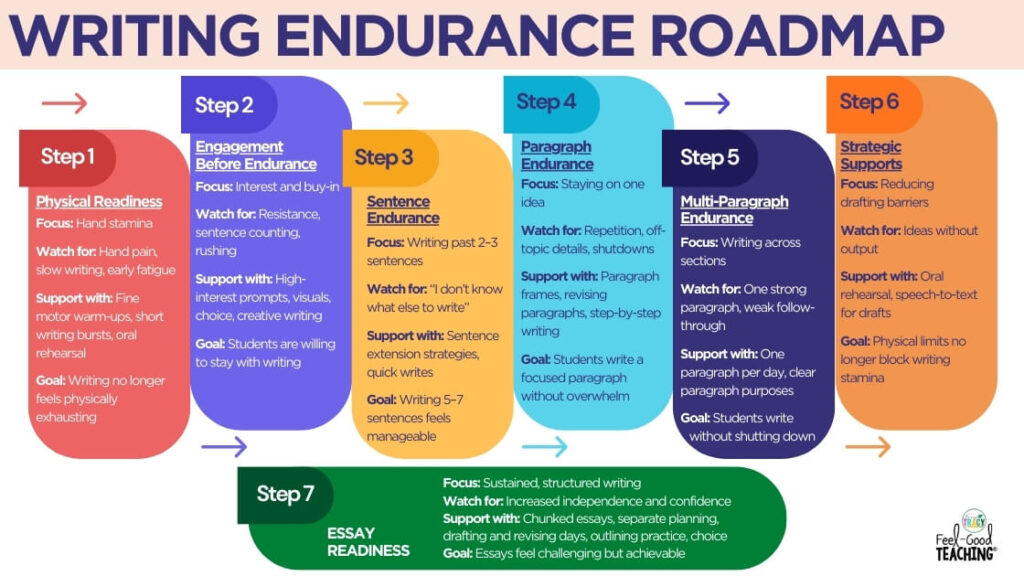
Writing five to seven sentences feels impossible for some students because it requires more than ideas. It requires sentence-level endurance.
This post focuses on Step 3 of the Writing Endurance Roadmap.
Head back to the introduction if you’ve missed anything in the series so far.
Why Students Stall After a Few Sentences
When students stop expanding sentences early, it’s usually because one (or more) of these things is happening:
- They don’t know how to extend an idea
- They’re unsure what “good writing” looks like beyond a few sentences
- They’re mentally juggling too many things at once (ideas, spelling, handwriting, punctuation)
- They’re afraid of writing poorly
- Writing already feels tiring, physically or mentally
This isn’t necessarily a motivation issue. And even if it is, there is also very likely an expanding sentences skill gap. We don’t want to be fighting both battles at once! (For more on motivation issues, check out my last post in this series.)
Students need to be taught how to keep going.
Writing Endurance at the Sentence Level
Sentence endurance is the ability to:
- generate one sentence after another
- stay focused on the same idea
- elaborate instead of repeating
- tolerate the discomfort of writing past the “easy part”
If students haven’t built this stamina, asking for longer writing won’t help. It just increases resistance.
The goal isn’t to force more sentences. It’s to make additional sentences feel manageable and purposeful.
Redefine What “Enough” Writing Looks Like
Before expecting longer writing, it helps to reset expectations.
Instead of:
- “Write 5–7 sentences.”
Try focusing on:
- writing one strong sentence, then adding to it
- developing an idea instead of hitting a number
- quality before quantity
When students understand what to add next, sentence count becomes less intimidating.
✏️ Teaching Expanding Sentences
Students often stop because they don’t know what their next move should be.
Explicitly teaching sentence extension strategies gives them a path forward.
Here are a few simple prompts students can use independently:
- Add a detail (what does it look, sound, or feel like?)
- Explain why something happened
- Describe a character’s thoughts or feelings
- Add an action or reaction
- Include dialogue
When these options are visible and familiar, students are more willing to continue writing.
Build Sentence Endurance in Short Bursts
Endurance grows through consistent, low-pressure practice, not long writing blocks.
Effective approaches include:
- timed writing (2–5 minutes)
- quick writes using visuals or prompts (grab a freebie below)
- expanding sentences challenges (add one more sentence, then stop or create a team writing piece where one student writes one sentence and passes paper to the student on the right to continue the paragraph or story with just one more sentence.)
- revising and expanding sentences or paragraphs that are already written
Short bursts reduce overwhelm while still strengthening stamina.
Separate Writing From Revising
One reason students stall is that they’re trying to do everything at once:
- generate ideas
- write sentences
- fix spelling
- improve word choice
That’s exhausting.
Students are more likely to keep going when they are allowed to:
- write freely first
- revise later
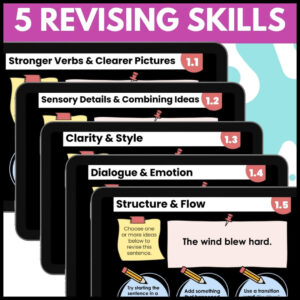
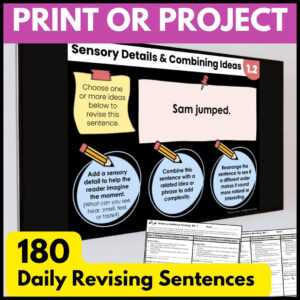
Revising sentences separately builds endurance without the emotional load of drafting. Grab a no-prep resource for this below:


Normalize the Discomfort of Writing Longer
Writing past the first few sentences should feel uncomfortable. That’s where growth happens.
Help students understand:
- feeling stuck doesn’t mean you’re done
- writers often need to push gently past that moment
- strategies exist to help them continue
This shifts writing from “I can’t” to “I need a tool.”
What This Looks Like in the Classroom
When sentence endurance improves, you’ll notice:
- fewer complaints about length
- students staying on-task longer
- writing that feels more developed
- greater willingness to revise
Five to seven sentences stops feeling impossible because students know how to get there.
What’s Next
In the next post, we’ll move from sentences to paragraph endurance and look at how to help students sustain one idea without meltdowns or shutdowns. (Head back to the Writing Endurance series introductionto catch up on past posts.)
Writing endurance isn’t built by demanding more. It’s built by teaching students how to continue.
PIN ME