
If you’ve ever asked students to write just five to seven sentences and been met with groans, shutdowns, or “I don’t know what to write,” you’re not alone. That response isn’t always a motivation problem. It’s often a writing endurance problem.
Writing endurance isn’t about how much students can write on a good day. It’s about how long they can sustain thinking, focus, and effort without becoming overwhelmed. For many kids, especially in upper elementary and middle school, that endurance hasn’t fully developed yet, even if they have strong ideas and solid writing skills.
This series is about how we build that endurance intentionally, without burnout, power struggles, or assigning essays before students are ready.
What Writing Endurance Really Means
Writing endurance is the ability to:
- stay with an idea long enough to develop it
- keep writing when it starts to feel hard
- manage the physical, mental, and emotional demands of writing
- revise and improve writing without shutting down
It’s not about speed.
It’s not about perfection.
And it’s definitely not about forcing students to “just write more.”
Endurance is a skill. And like any skill, it develops gradually and strategically.
Why Jumping Straight to Essays Doesn’t Work
When students struggle with writing stamina, it’s tempting to think the solution is more practice or longer assignments. But without the right supports in place, that approach often backfires.
Students may:
- rush through writing just to be “done”
- resist writing altogether
- shut down during longer assignments
- associate writing with stress instead of growth
The problem isn’t that essays are bad. The problem is that essays require multiple layers of endurance that many students haven’t built yet.
This series breaks that process down.
The Big Goal: Essays (and Beyond)
Yes, the end goal is confident, capable writers who can handle:
- multi-paragraph responses
- structured essays
- extended writing tasks across content areas
But we don’t get there by starting with essays.
We get there by strengthening:
- sentence stamina
- paragraph stamina
- revision stamina
- idea stamina
One step at a time.
How This Series Is Structured
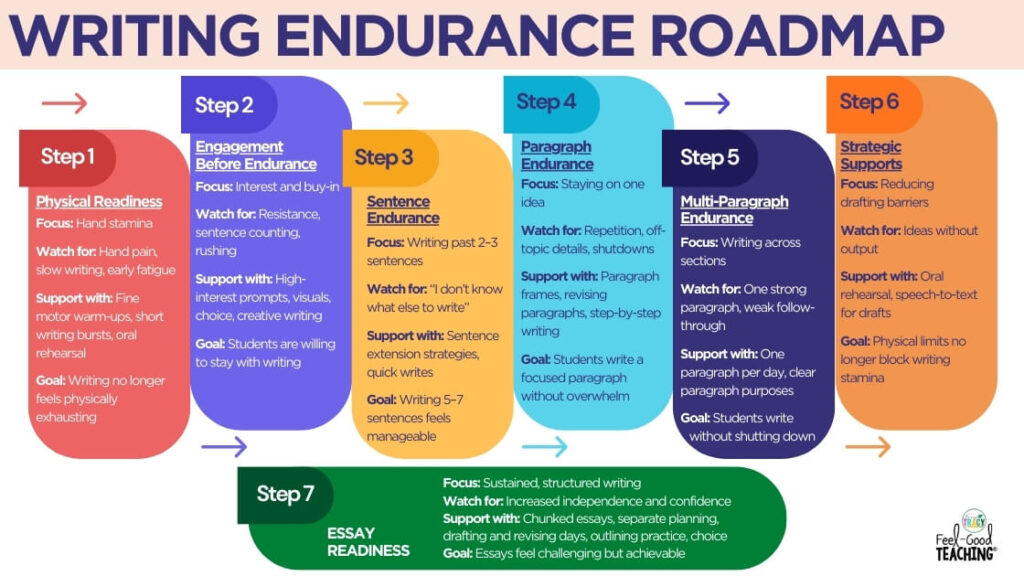
Building Writing Endurance: From Sentences to Essays follows a clear progression that mirrors how writing stamina actually develops in classrooms. (After each post is published, it will be linked below.)
- Physical readiness – When writing is physically exhausting, endurance can’t grow
- Engagement and interest – Students won’t persist if they don’t care about the task
- Sentence endurance – Helping students keep going past the first few sentences
- Paragraph endurance – Sustaining one idea with structure and support
- Multi-paragraph writing – Managing longer writing without overwhelm
- Strategic supports – Tools like oral rehearsal and speech-to-text
- Essays – When students are finally ready for sustained, structured writing
Each post will focus on practical strategies you can use right away, whether you’re teaching writing daily or fitting it into packed schedules.
Why Writing Endurance Matters More Than Ever
Writing demands increase quickly as students move through the grades. At the same time, many kids are:
- developing fine motor skills later
- juggling more complex academic expectations
- carrying anxiety or past writing frustration
When we teach endurance intentionally, we:
- reduce resistance
- build confidence
- create writers who are willing to try and keep going
That’s when real growth happens.
What’s Coming Next
In the next post, we’ll start at the very beginning:
What to do when writing is physically hard, and how fine motor fatigue can quietly block writing endurance before students ever get to sentences or paragraphs.
If your students complain that writing hurts, feels exhausting, or takes too much effort, that post is for you.
Final Thought
We don’t build strong writers by demanding more writing.
We build strong writers by helping students stay with writing long enough to grow.
Let’s start there.
PIN ME