If students shut down, rush through writing, or constantly ask, “How many sentences does this have to be?” the issue often isn’t ability. It’s engagement, and engaging reluctant writers is the next mountain to climb when you’re building writing endurance with your students.
Before students can build writing endurance, they need a reason to stay with the work. If they don’t care about what they’re writing, or don’t feel connected to the task, stamina becomes a struggle no matter how short the assignment is.
Engagement isn’t a bonus in writing instruction. It’s a prerequisite.
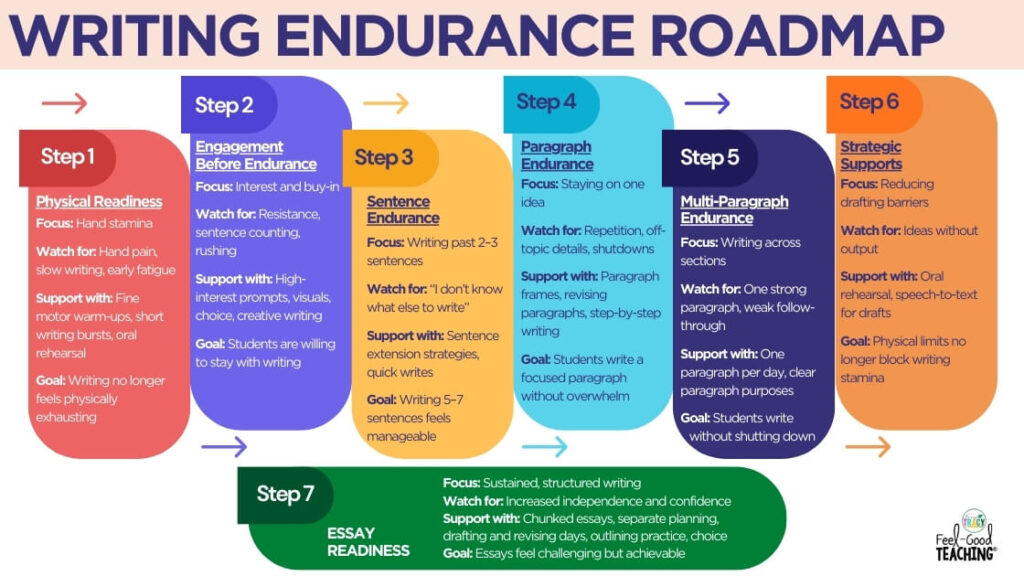
This post is focused on Step 2 of the Writing Endurance Roadmap.
Head back to the introduction if you’ve missed anything in the series so far.
Writing Endurance Is Emotional Before It’s Academic
Writing requires risk. Students have to put ideas on paper, make choices, and trust that what they write is “good enough” to keep going.
Students conserve energy by doing the minimum when a task feels:
- boring
- overwhelming
- disconnected
- or too open-ended
High-interest writing lowers that emotional barrier. When students are curious or invested, they’re far more likely to persist, even when writing gets challenging.
High-Interest Does Not Mean Low Rigor
This is an important distinction.
High-interest writing is not:
- unstructured
- chaotic
- off-task
- or academically weak
The rigor comes from the skills, not the topic.
Strong writing skills can be practiced through:
- creative stories
- problem-solving scenarios
- visuals and prompts
- revision challenges
The expectations stay high. The entry point becomes accessible.
Engaging Reluctant Writers with “High-Interest”
High-interest writing typically includes one or more of the following:
- Choice (even small choices)
- Novelty (something unexpected or playful)
- Storytelling (characters, problems, outcomes)
- Visuals or tactile elements
- A manageable scope (students can see an ending)
When these elements are present, students are more willing to stay engaged long enough to build endurance.
Examples of High-Interest Writing That Builds Endurance
🎲 Choice-Based & Randomized Prompts
Mix-and-match story elements (characters, settings, and problems) give students ownership without overwhelming them. Because the ideas are already there, students can focus on writing instead of staring at a blank page. You can have students help generate the lists, which increases buy-in when you’re engaging reluctant writers.
Encourage a mix of characters who wouldn’t ordinarily interact (think: Big Bird, their favorite musician, an athlete, their principal, etc.) to make the storytelling more fun.
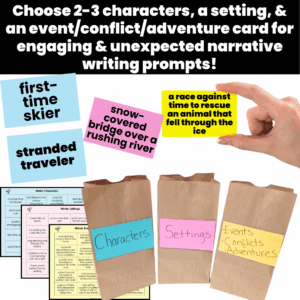
These types of prompts naturally extend writing time without students noticing. For a ready-made resource, check out Paper Bag Stories.
🖼️ Visual Writing Prompts
Images invite interpretation. Two students can look at the same picture and write completely different responses.
Visual prompts are especially powerful for:
- engaging reluctant writers
- students who struggle to generate ideas
- quick writes and warm-ups
They help students get started quickly and stay engaged longer. I suggest daily quick writes and at the end of every 5 or more, have students select their favorite one to expand into a longer writing piece. You can grab a set of 5 for free below.
🛠️ Revising Instead of Drafting
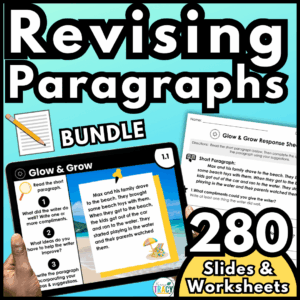
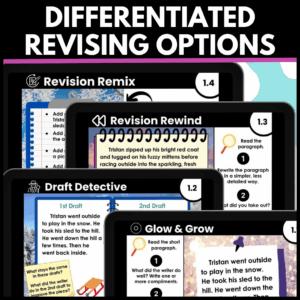
Revising pre-written paragraphs removes the pressure of creating something from scratch. Students still practice critical writing skills (analyzing, improving, and expanding ideas) without the emotional load of drafting. It’s much easier to bring a critical eye to someone else’s writing.
Revising is easier to teach this way because students come to the task with all their energy intact and because the writing isn’t theirs or a classmate’s, no one’s feelings are at risk. You can get prewritten drafts by saving copies of writing from previous years, swapping with another grade-level class, Chat GPT, or make them yourself.
You can also check out this No Prep Revising Activities Bundle, complete with editable slides, worksheets and checklists.
✏️ Sentence & Paragraph Challenges
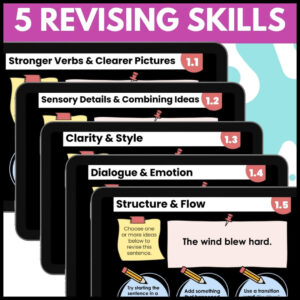
Short, focused challenges help with engaging reluctant writers to stretch their writing without overwhelming them:
- add one detail
- improve word choice
- combine sentences
- rewrite for clarity
These tasks feel achievable, which keeps students working longer. Stretch-a-Sentence works beautifully for this, and if you give students a chance to share their sentences out loud, they become more invested because they want to entertain or impress their peers. Highly recommend taking a few minutes at the beginning of class or a transition for this. Some of my favorite laugh-out-loud teaching memories come from this activity!

Why Engaging Reluctant Writers Helps Students Write Longer Without Complaining
When students are engaged:
- they stop counting sentences
- they spend more time on-task
- resistance decreases
- writing improves as a side effect
Endurance grows because students are willing to stay with the task, not because they’re forced to.
Start With Interest, Then Transfer the Skill
High-interest writing isn’t the end goal. It’s the starting point.
Once students build stamina through engaging tasks, those same skills transfer to:
- academic paragraphs
- structured responses
- essays
The writing may look different, but the endurance is already there.
What’s Next
In the next post, we’ll tackle a very specific frustration: what to do when students freeze after two or three sentences and how to help them keep writing without pressure or burnout. You can also head back to the Writing Endurance series introductionto catch up on past posts.
Building writing endurance doesn’t start with longer assignments. It starts with designing writing tasks that are engaging reluctant writers (and all students) so they are willing to stick with it when the writing gets tough!
PIN ME