If students groan, stop after two sentences, or complain that their hand hurts when it’s time to write, it’s easy to assume the problem is motivation or effort. Often physical writing stamina is the culprit.
For many students, especially in upper elementary, writing is physically exhausting before it ever becomes mentally challenging. If their hands tire quickly, no amount of encouragement or longer assignments will build writing endurance.
Before we ask students to write more, we need to make sure their bodies are ready to handle the work.
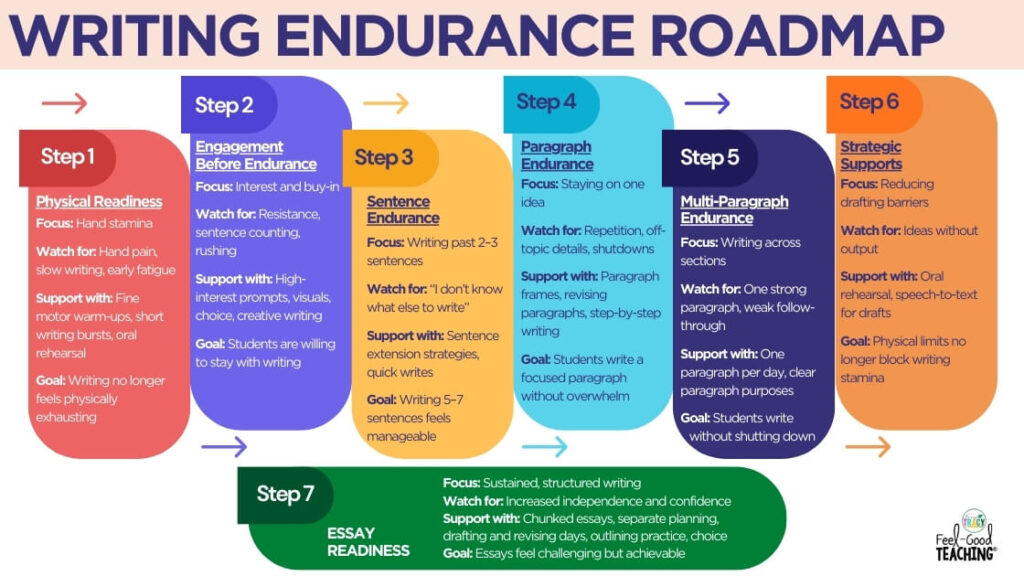
This post focuses on Step 1 of the Writing Endurance Roadmap.
Head back to the introduction if you’ve missed anything in the series so far.
Physical Writing Stamina Comes Before Writing Endurance
Writing isn’t just a thinking task. It’s a fine motor task that requires:
- hand strength
- finger coordination
- grip control
- sustained muscle use
As writing demands increase from sentences to paragraphs and essays, students are asked to maintain that physical effort for longer stretches of time, often without having built up the stamina first.
When physical fatigue sets in, students may:
- rush to finish
- avoid writing altogether
- disengage mentally
- produce messy or incomplete work
What we often assume is laziness might actually be fatigue.
Signs Fine Motor Fatigue Is Affecting Writing
You may notice:
- complaints of hand pain or cramping
- excessive erasing
- very slow writing pace
- pressing too hard or too lightly
- switching hands frequently
- writing quality dropping quickly
These are signs that writing endurance can’t grow yet, because the physical writing stamina foundation isn’t solid.
Why “Just Writing More” Often Backfires
Asking students to push through physical fatigue doesn’t build stamina — it builds resistance.
When writing hurts or feels exhausting:
- students associate writing with discomfort
- confidence drops
- avoidance increases
Instead of longer writing blocks, students need short, intentional practice that strengthens fine motor skills without overwhelming them.
Short, Fun Fine Motor Warm-Ups (5 Minutes or Less)
These activities can be used as writing warm-ups, brain breaks, or transitions before longer writing tasks to build writing stamina. They’re quick, low-pressure, and effective. (More examples are listed below the video.)
✏️ Pencil-In-Hand Activities
- Tracing loops, zigzags, or shapes
- Writing the alphabet tiny, huge, or wavy
- Copying one short sentence with focus on control
- Drawing patterns or borders before writing
🧠 No-Pencil Activities
- Finger taps or thumb-to-finger touches
- Squeezing putty, clay, or stress balls
- Tearing and folding paper
- Rubber band stretches
🎲 Play-Based Options
- Building with small blocks or connectors
- Clothespin, tongs or clip challenges
- Build block towers using tongs
- Minute-to-win-it-style challenge to pull as many red beads or pom-poms from a mixed container using only clothespins (partner students up & they take turns as the time-keeper/referee and the one pulling the beads).
- Sewing, weaving, embroidery, or knitting
- Braiding yarn or making string bracelets
- Origami or 90s-style note folding
These should feel like play, not therapy.
Build Writing Stamina Without Writing Full Paragraphs
Students don’t need to write paragraphs to build writing stamina, especially at the start.
Instead, try:
- drawing and labeling before writing
- tracing → copying → writing one sentence
- oral rehearsal before writing
- revising short pieces instead of drafting new ones
Reducing the physical load while keeping thinking high allows endurance to grow gradually.
Adjust the Writing Load Without Lowering Expectations
Supporting fine motor stamina doesn’t mean lowering standards.
It means:
- breaking writing into short bursts
- alternating writing with revising or oral work
- allowing tools like drawing or speech-to-text for early drafts
- focusing on quality over quantity
Students still develop strong writing skills; they just do it without burning out first.
How This Supports Longer Writing Later
Essays and extended responses require sustained physical effort. When students haven’t built fine motor writing stamina, those tasks feel impossible before they even begin.
By supporting physical readiness early, you:
- reduce frustration
- build confidence
- make longer writing achievable later
This is the first step in building writing endurance that actually lasts.
What’s Next
In the next post, we’ll look at why engagement and high-interest writing tasks are essential for building endurance and why students won’t persist if they don’t care about what they’re writing. Head back to the Writing Endurance series introduction to catch up on past posts.
Writing endurance doesn’t start with longer assignments.
It starts with removing the barriers that make writing hard in the first place.
PIN ME