If you’ve ever searched for easy STEM activities, you’ve probably found dozens of ideas that look amazing…until you read the materials list.
Suddenly you need balloons, PVC pipe, hot glue, batteries, motors, and half a craft store just to get started.
The truth is that easy STEM activities for elementary students don’t have to be complicated to be meaningful. In fact, some of the best STEM challenges use just a handful of everyday classroom supplies while still encouraging students to think creatively, solve problems, and explain their reasoning.
Whether you’re planning for a STEM block, looking for an engaging Fun Friday activity, filling a short class period, or preparing emergency STEM sub plans, simple challenges often produce the biggest “aha!” moments.
If you’ve been looking for STEM challenges that use everyday classroom materials, take about 15–20 minutes, and still get students thinking like engineers, you’re in the right place.
In this post, I’ll share what makes a STEM activity truly easy to implement, how to create your own challenges, and a free STEM activity you can use with your students tomorrow.
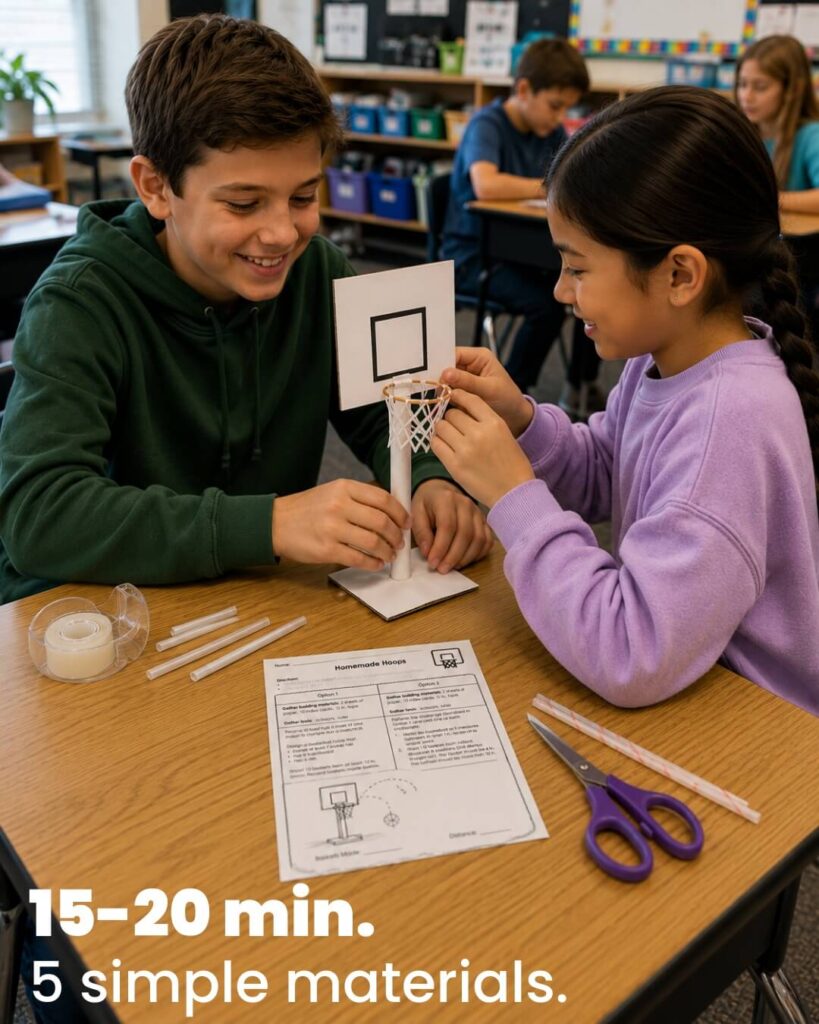
What Makes a STEM Activity Easy?
When teachers say they want easy STEM activities, they usually aren’t looking for activities that require less thinking. They want easy to prep, not necessarily easy for students.
They’re looking for activities that require fewer barriers.
After creating resources used by thousands of teachers, I’ve noticed that the STEM lessons used most often all have a few things in common.
1. They Use Simple Classroom Materials
One of the biggest reasons STEM lessons stay on the shelf is because gathering supplies becomes another item on an already full to-do list.
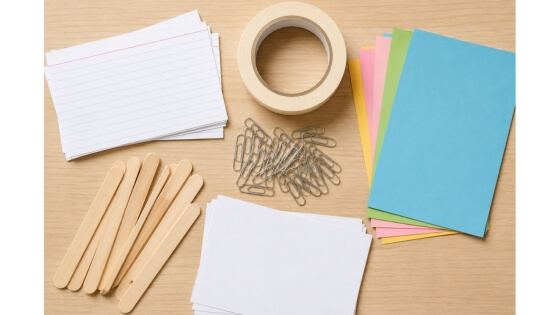
Instead, look for challenges that use materials already hiding in your classroom or home:
- index cards
- paper
- tape
- craft sticks
- straws
- cups
- paper clips
- string
- aluminum foil
Limiting materials doesn’t limit creativity.
In fact, it often does the opposite.
When students have fewer materials to choose from, they spend less time sorting through supplies and more time solving the problem in front of them.
2. Easy STEM Activities Fit Into Real Classroom Schedules
Pinterest is full of STEM projects that take several class periods. Those certainly have a place, but many teachers simply don’t have that kind of flexibility.
Very successful STEM lessons can happen in just 15 to 20 minutes.
Short STEM challenges work well for:
- morning tubs
- STEM centers
- enrichment groups
- early finishers
- after-school programs
- substitute teachers
- Fun Friday
- indoor recess
- reward days
Students still experience the engineering design process—they simply complete a smaller design challenge that fits naturally into the school day.
Consistency often matters more than length. Completing one short engineering challenge every week can build problem-solving habits far more effectively than waiting months for a large project.
3. Students Can Work Independently
One of the easiest ways to make STEM manageable is to design activities students can begin with minimal teacher support.
When directions are clear and expectations stay consistent from one challenge to the next, students become increasingly independent and can pull quick easy STEM activities for choice boards, soft starts and early finisher tasks without needing your assistance.
4. Offer More Than One Way to Succeed
One of the biggest challenges in elementary STEM is meeting the needs of students with different experience levels.
A first-time builder shouldn’t feel overwhelmed.
An experienced builder shouldn’t finish in two minutes and become bored.
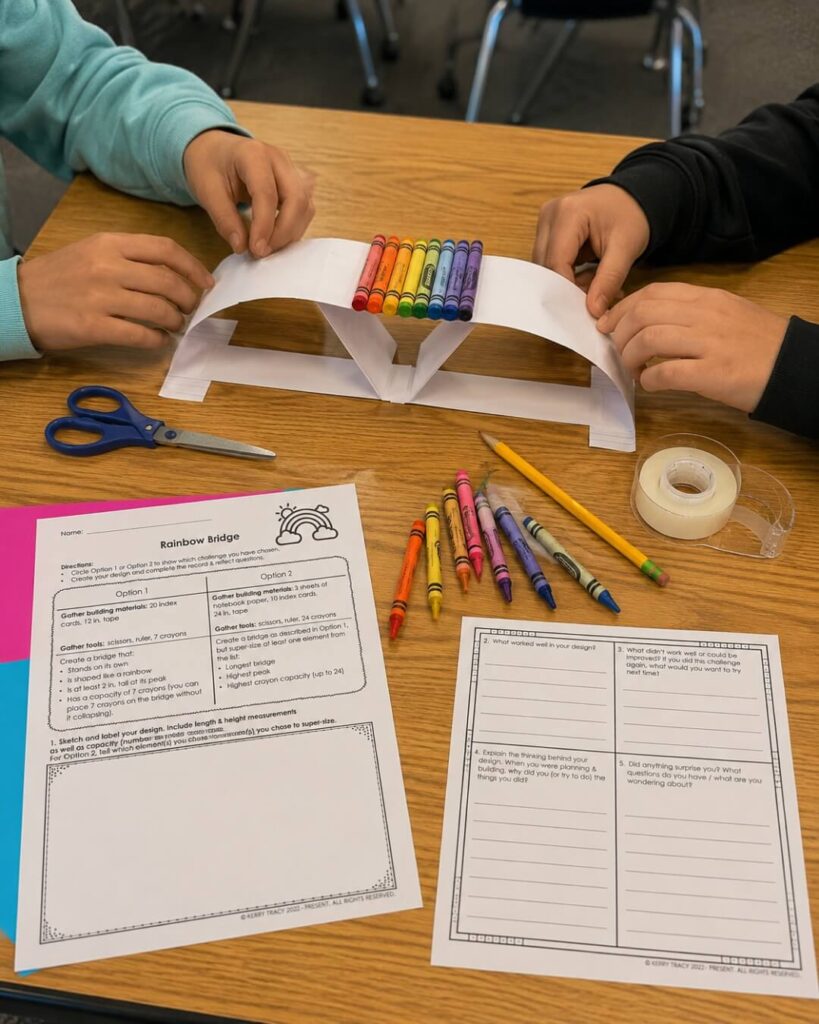
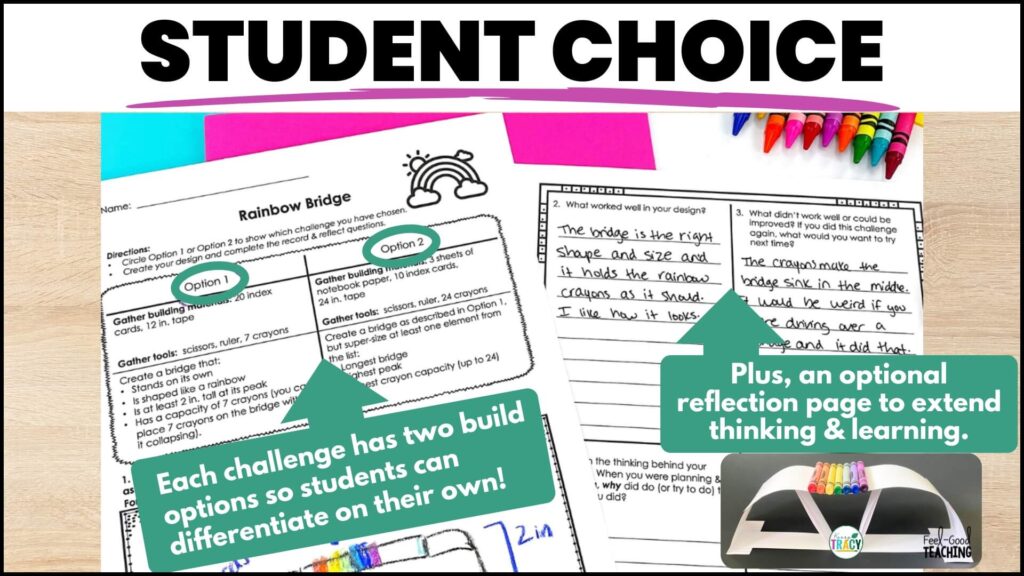
One simple solution is to offer two versions of the same challenge.
For example:
Option 1
Build the tallest tower you can using ten index cards.
Option 2
Build the tallest freestanding tower that can also support a small object at the top.
The materials stay the same.
The expectations change.
This gives students choice while naturally differentiating the activity without creating entirely separate lessons.
5. Make Reflection Part of the Learning
Building is exciting.
Reflection is where much of the learning happens.
Even a few simple questions can help students think more deeply about their work.
Ask questions such as:
- What was your biggest challenge?
- What worked better than you expected?
- If you built it again, what would you change?
- Which science or engineering ideas helped you solve the problem?
Reflection encourages students to explain their thinking, communicate with others, and recognize that redesign is a normal part of engineering.
That mindset often transfers to future STEM challenges as students become more willing to test ideas, learn from mistakes, and improve their designs.
How to Create Your Own Easy STEM Activities
You don’t need an engineering degree to design engaging STEM challenges for your students.
Many successful activities follow the same simple structure.
Once you understand the pattern, you’ll start noticing STEM opportunities everywhere.
Step 1: Start with a Simple Science or Engineering Idea
Choose one concept students are already learning.
Examples include:
- simple machines
- bridges
- weather
- force and motion
- habitats
- geometry
- animals
- sound
- light
- structures
Keeping the focus narrow helps students make meaningful connections between science concepts and hands-on problem solving.
Step 2: Choose Just a Few Materials
Resist the temptation to provide every possible supply.
Instead, ask yourself:
“What’s the fewest number of materials students need to solve this problem?”
Limiting materials encourages creativity because students must think carefully about how to use each item.
It also makes cleanup faster, storage easier, and future setup much more manageable.
Step 3: Give Students a Clear Goal
Every STEM challenge starts with one simple question:
What are students trying to accomplish?
The best goals are specific enough to provide direction but open enough to encourage creative solutions.
Some examples include:
- Build the tallest tower.
- Design a bridge that spans a gap.
- Create something that slows a falling object.
- Design a shade structure that blocks sunlight.
- Build a launcher that sends an object the farthest.
- Construct a raft that holds the most weight.
- Design a bird beak that can pick up different “foods.”
Notice that none of these challenges has just one correct answer.
Instead, students must brainstorm ideas, test their thinking, and improve their designs based on what they discover.
Step 4: Add a Constraint
Real engineers don’t have unlimited time or unlimited materials. Neither should our students. Easy STEM activities should still have constraints!
A simple constraint transforms a craft into an engineering challenge.
For example, instead of:
Build a tower.
Try:
Build the tallest freestanding tower using only ten index cards and 30 cm of tape.
Or instead of:
Build a bridge.
Try:
Build a bridge that spans 30 centimeters and supports a stack of books using only paper and tape.
Constraints encourage students to think strategically rather than simply adding more materials.
Step 5: Encourage Testing and Improvement
One thing that separates STEM from many classroom activities is that the first attempt isn’t expected to be perfect.
Students often learn more from redesigning as they do from building. There isn’t always time to improve the build in easy STEM activities you have planned to complete in a 15-minute period, but there might be time to reflect.
Encourage students to ask questions like:
- What worked well?
- What failed?
- Why did that happen?
- What small change could improve the design?
Even in a 15-minute activity, students can experience the engineering design process:
- Ask
- Imagine
- Plan
- Create
- Test
- Improve
Even if there isn’t always time to improve the build in the same sitting, you can allow students to revisit the same quick build any time to improve!
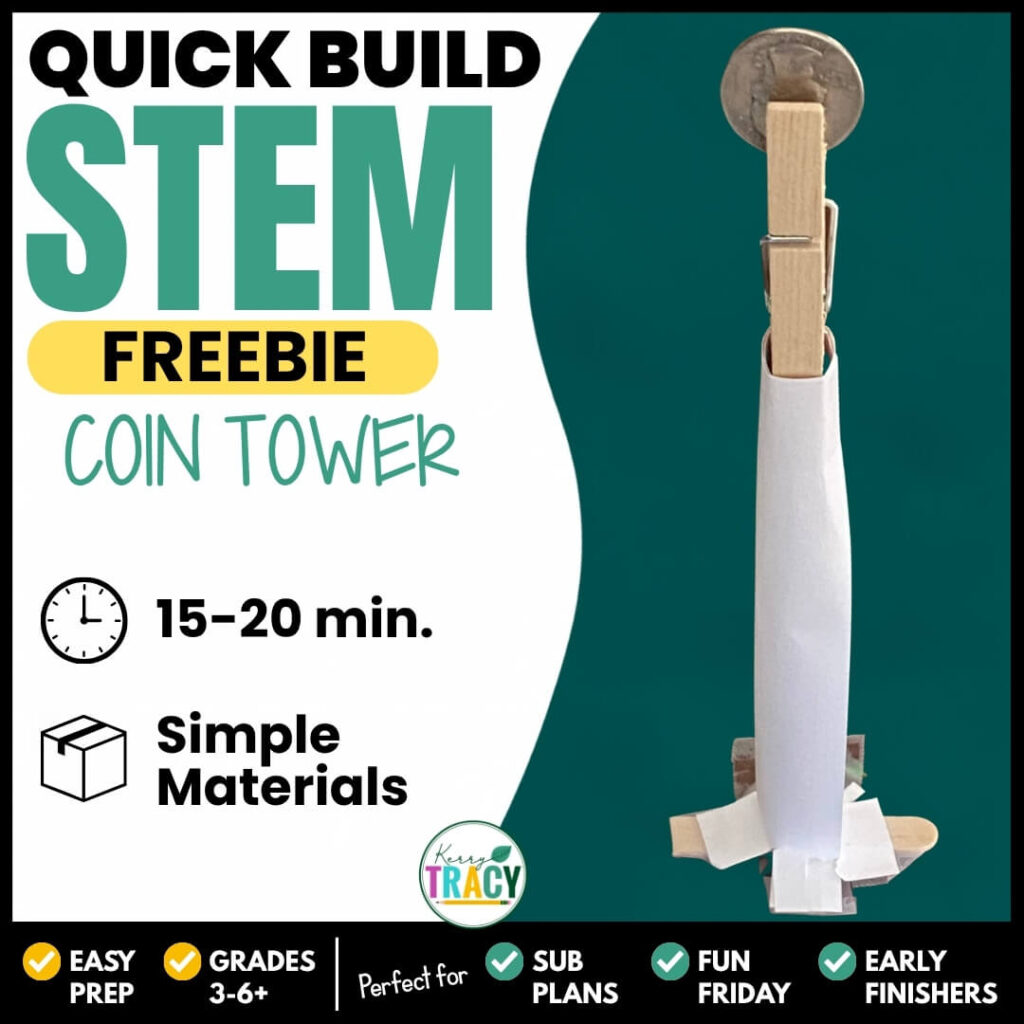
Try This Easy STEM Activity: Coin Tower Challenge
Now that you’ve seen the framework, let’s put it into action.
This simple engineering challenge is one of my favorite easy STEM activities because it uses materials almost every classroom already has.
Where Can You Use Easy STEM Activities?
One of the biggest advantages of short STEM challenges is their flexibility. Instead of saving STEM for special occasions, you can weave it throughout the school year.
STEM Centers
Short challenges make excellent rotating STEM centers because students quickly learn the routine.
Rather than spending time explaining new procedures every week, students can jump right into solving the next challenge.
Early Finishers
Finding meaningful work for early finishers can be difficult.
Instead of handing students another worksheet, invite them to solve an engineering challenge.
They’ll continue practicing creativity, collaboration, and problem solving while other students finish their assignments.
STEM Sub Plans
Hands-on learning doesn’t have to disappear when you’re absent.
The best substitute-friendly STEM activities include:
- familiar routines
- simple materials
- clear directions
- independent work
- and, of course, simple materials!
That allows students to stay engaged while giving substitute teachers confidence that the lesson will run smoothly.
Need more STEM Sub Plans ideas? Check out 9 Simple STEM Sub Plans.
Fun Friday
Many teachers love ending the week with something students genuinely look forward to.
A short engineering challenge keeps learning active while bringing energy and excitement into the classroom.
Better yet, students often leave talking about the different solutions their classmates created.
Homeschool Learning
Easy STEM activities also work well at home.
Parents don’t need elaborate kits or expensive equipment.
A few everyday supplies, an interesting problem, and plenty of curiosity are often enough to create meaningful learning experiences.
After-School Programs and Makerspaces
Because these challenges use simple materials and don’t require long introductions, they’re a natural fit for enrichment clubs, libraries, family STEM nights, and after-school programs.
Variety Keeps Students Engaged
One of the easiest ways to lose student excitement is to repeat the same type of challenge over and over.
Building towers is fun.
Building towers every week…not so much.
Instead, think about varying the context while keeping the design process familiar.
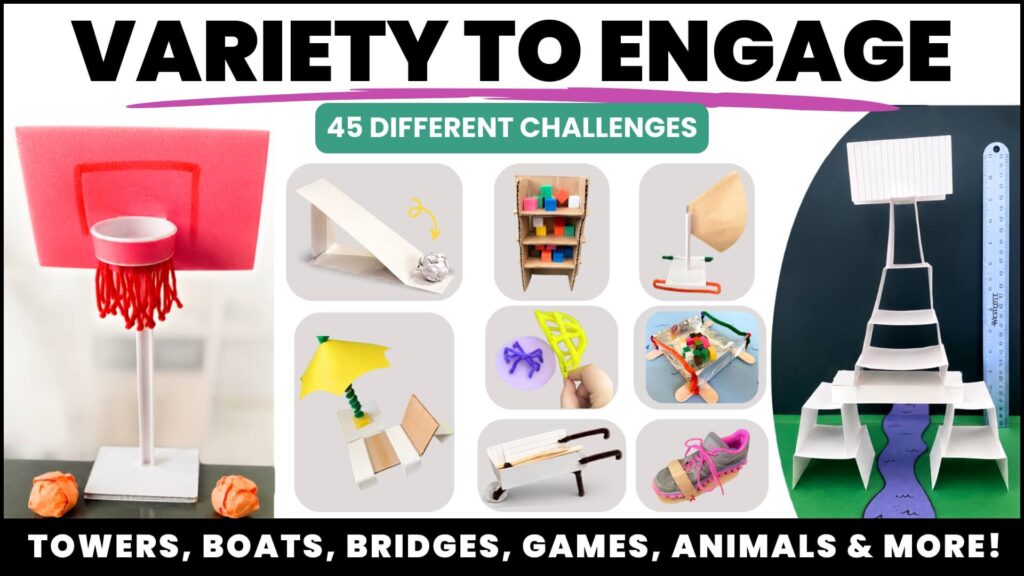
One week students might design a bridge.
The next week they might create a bird beak.
Later they could build a wheelbarrow, launcher, raft, shade structure, or basketball hoop.
Although the engineering process stays consistent, the challenges feel fresh because students apply their thinking to different science topics and real-world problems.
Better yet, these themes can easily reinforce concepts students are already learning in science. A weather unit might inspire a wind-resistant structure. A simple machines lesson could lead into a launcher challenge. A habitats unit could become an opportunity to design an animal adaptation.
When easy STEM activities connect to classroom learning in authentic ways, students begin to see science and engineering as tools for solving problems rather than isolated subjects.
When It Makes Sense to Create Your Own Easy STEM Activities
Designing your own STEM activities can be incredibly rewarding.
You know your students.
You know your curriculum.
You know which science concepts deserve extra attention.
Creating your own challenges also allows you to connect STEM directly to the topics you’re already teaching.
A weather unit might become a wind-resistant shelter challenge.
A geometry lesson could inspire a paper engineering activity.
A simple machines unit naturally lends itself to designing launchers or ramps.
If you enjoy designing lessons, using the framework we’ve discussed can help you create meaningful STEM experiences without starting from scratch every time.
…Or Save Yourself Hours of Planning
Of course, creating one STEM challenge is very different from creating forty-five easy STEM activities.
Each challenge needs:
- a meaningful engineering problem
- appropriate materials
- realistic constraints
- reflection questions
- student directions
- opportunities for differentiation
- connections to science concepts
- two difficulty levels for each challenge
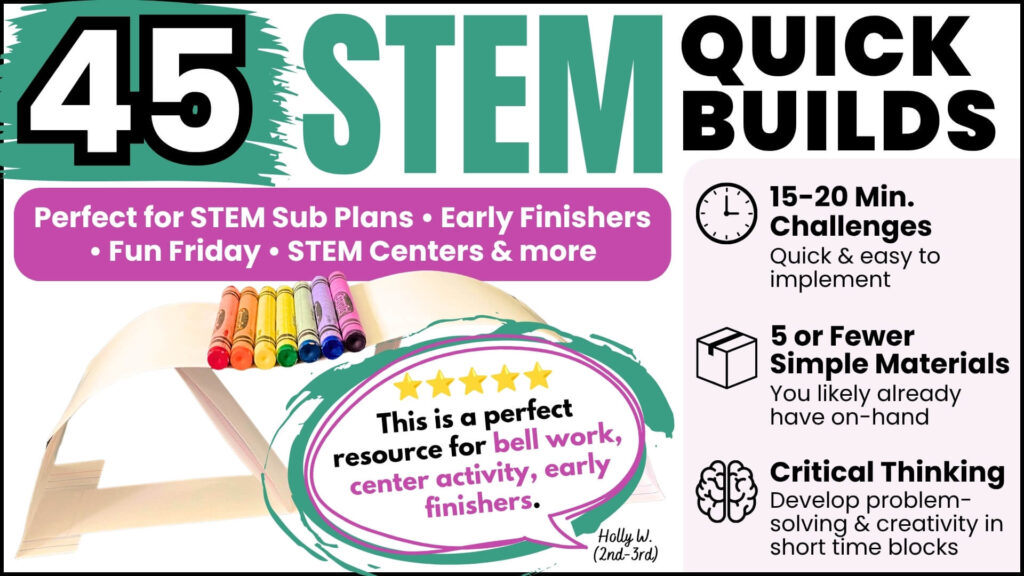
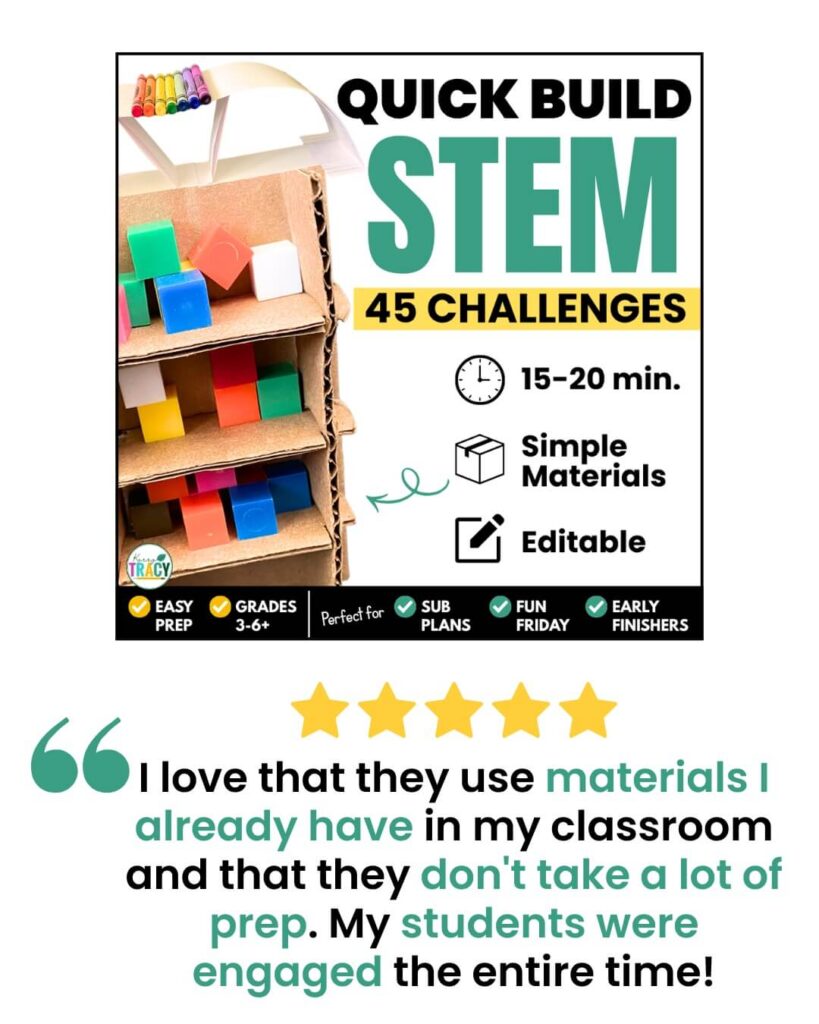
That’s exactly why I created my 45 Quick Build Easy STEM Activities resource.
Instead of spending hours designing dozens of activities yourself, you’ll have a ready-to-use collection of challenges that follow the same classroom-friendly structure we’ve explored throughout this article.
Each challenge:
✔ uses five or fewer common classroom materials
✔ takes about 15–20 minutes
✔ includes two challenge options for built-in differentiation
✔ encourages students to test, improve, and reflect
✔ works well for STEM centers, early finishers, substitute plans, enrichment, and Fun Friday
The goal isn’t simply to give students something to build.
It’s to make meaningful STEM instruction easier to use consistently throughout the school year.
Ready for 45 Easy STEM Activities?
- 45 ready-to-use challenges
- 15–20 minute lessons
- Five or fewer materials
- Two challenge options
- Editable student pages
- Perfect for Grades 2–5
Frequently Asked Questions About Easy STEM Activities
What are easy STEM activities?
Easy STEM activities are short engineering or science challenges that use simple materials while encouraging students to design, test, improve, and explain their thinking.
What materials do I need for STEM activities?
Many elementary STEM activities can be completed using supplies already found in most classrooms, including paper, index cards, tape, craft sticks, cups, straws, string, and paper clips.
How long should a STEM activity take?
While some engineering projects span several days, many meaningful STEM challenges can be completed in about 15–20 minutes, making them perfect for busy classroom schedules.
Are STEM activities good for early finishers?
Yes. Short engineering challenges provide meaningful independent work that keeps students thinking instead of simply staying busy.
Can STEM activities be left for a substitute teacher?
Absolutely. The best STEM sub plans use familiar routines, simple materials, and clear student directions so learning continues even when you’re away.
Can homeschool families use these STEM activities?
Definitely. Because they rely on common household or classroom materials, many quick STEM challenges work just as well in homeschool settings as they do in traditional classrooms.
Final Thoughts About Easy STEM Activities
The best STEM lessons don’t require expensive kits, complicated preparation, or hours of class time.
They simply require an interesting problem, a handful of materials, and the freedom for students to think, test, and improve.
Whether you choose to design your own activities using the framework in this article or start with a ready-made collection, the goal is the same:
Help students discover that engineering isn’t about finding one perfect answer.
It’s about asking good questions, trying new ideas, and learning from every design.
Related Articles
I’d add these naturally throughout the article:
- 9 Simple STEM Sub Plans
- Ideas for 30-Minute Easy STEM Activities
- Design Domino – If your students enjoy open-ended engineering thinking, they may also enjoy these Design Domino STEM challenges.
Pin Me